
"nasal carriage"
1300 article(s) found

Harald Coffee grows one of the highest elevation areas of coffee
Harald (Harar) is 1600 meters above sea level, and the Harald Heights in eastern Ethiopia is one of the highest elevation areas for human coffee cultivation (some even claim to be as high as 2000 Murray 2,700 meters). Across the Gulf of Aden, overlooking the two ports of Moka and Aden in Yemen. For centuries, Harald coffee farmers carried coffee beans down the mountain with camels, donkeys or carriages, risking being besieged by hyenas.

African coffee flavor beans Harald Coffee Flavor cultivated in eastern Ethiopia
Harald (Harar) is 1600 meters above sea level, and the Harald Heights in eastern Ethiopia is one of the highest elevation areas for human coffee cultivation (some even claim to be as high as 2000 Murray 2,700 meters). Across the Gulf of Aden, overlooking the two ports of Moka and Aden in Yemen. For centuries, Harald coffee farmers carried coffee beans down the mountain with camels, donkeys or carriages, risking being besieged by hyenas.

Introduction of Harald High quality Coffee-- Harald Coffee Harald Coffee taste Hara
Harald (Harar) is 1600 meters above sea level, and the Harald Heights in eastern Ethiopia is one of the highest elevation areas for human coffee cultivation (some even claim to be as high as 2000 Murray 2,700 meters). Across the Gulf of Aden, overlooking the two ports of Moka and Aden in Yemen. For centuries, Harald coffee farmers carried coffee beans down the mountain with camels, donkeys or carriages, risking being besieged by hyenas.

Paris Metro and Cafe Culture, France
The subway culture in Paris is the place where the urban middle class is most concentrated, especially during the rush hour. Through the subway, which reflects the culture of the city, we can learn a lot about the city and culture. While working in Paris, I have to change lines three times a day to get to and from work, and take the subway back and forth for three hours, so I am impressed by the Paris subway.

Harald Coffee one of the highest elevation areas of coffee cultivated in Ethiopia
Harald (Harar) is 1600 meters above sea level, and the Harald Heights in eastern Ethiopia is one of the highest elevation areas for human coffee cultivation (some even claim to be as high as 2000 Murray 2,700 meters). Across the Gulf of Aden, overlooking the two ports of Moka and Aden in Yemen. For centuries, Harald coffee farmers carried coffee beans down the mountain with camels, donkeys or carriages, risking being besieged by hyenas.
Elegant coffee cups of various countries
France HERMES Herm è s. The establishment of the Chaine dAncre Anchor Series HERMES Group must begin with the establishment of the saddle workshop by the founder Thierry Hermes in 1827. HERMES harness can be seen on the most beautiful horse-drawn carriage at that time. Thierry Hermes founded the harness company in 1837 and has since established the foundation of the HERMES group kingdom. 1920 generation

Why can't I get the sweetness of coffee? what is coffee sweetness? Smell or taste?
Barista: mm-hmm! This cup of coffee is very sweet! You:?? What's sweet? Barista: coffee is sweet. You: what does coffee feel like? New to individual coffee, do you wonder why baristas in front of the street often say that a cup of coffee is very sweet, but you don't drink it at all? What is coffee sweetness? Why can't my taste buds feel it? Coffee
Coffee shop fancy coffee formula Vienna coffee
The most famous Austrian coffee, Viennese coffee (Viennese), is the invention of the coachman Ein Shubner, so Viennese coffee is also known as the one-headed carriage. Snow-white fresh cream, sprinkled with colorful rice, the appearance is very beautiful; through the sweet chocolate syrup, cold cream sipping hot coffee, is a unique flavor. Ingredients: black coffee (brewed in siphon pot or mocha pot, strong

Six steps to evaluate coffee cups
There are six steps in coffee cup evaluation, describing the aroma, aroma, taste, smell, aftertaste and mellowness of coffee.

Why doesn't the coffee taste as mellow as it smells?
Why do we feel that it doesn't smell good when we drink coffee?

There are six steps in coffee cup evaluation.
There are six steps in coffee cup evaluation, describing the aroma, aroma, taste, smell, aftertaste and mellowness of coffee.
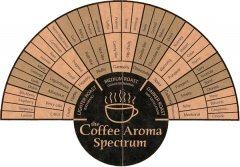
Coffee has over 800 aromas.
It can be sensed through the nose or by snorting back. Respirating occurs when coffee is present in the mouth or has been swallowed and the fragrant restorative substance wafts up the nasal passages. More than 800 aromas have been found in coffee, and more will be discovered as the accuracy of the analysis improves. Coffee smells bad.

What if I can't get the flavor of the coffee? What is the sense of smell behind the nose? Is the flavor of hand-brewed coffee smelled?
"Why can't I get the flavor of coffee?" This is the most common question I have ever heard about flavor in front of the street. Of course, Qianjie also shared a lot of ways to taste the coffee. But this article is to explore whether the flavor of coffee is drunk or smelled. According to the usual expression, the flavor of coffee is

Coffee beans taste, taste
1) ahenaste The sensation of steam in brewed coffee, ranging from chocolate to charcoal, from spicy to turpentine. Aftertaste is the smell released by the remaining ingredients in the mouth after swallowing coffee. Aroma The sensation of inhaling the gases released by coffee, ranging from fruity to grassy to nutty. Coffee (Bouquet)

Why can't you taste the coffee? How to improve your sensory judgment of coffee taste
Professional coffee knowledge exchange more coffee bean information please follow the coffee workshop (Wechat official account cafe_style) Guide I believe that friends who have just come into contact with individual coffee have the same doubt: clearly drinking the same cup of coffee, the barista can tell that this cup of coffee has the sweet and sour smell of strawberries and the aroma of roses. But I didn't drink anything except sour and bitter! It's my tongue that's too

Is it true that drinking coffee often reduces the risk of head and neck cancer?
Head and neck cancer includes oral cancer, nasal cancer, paranasal sinus cancer, salivary adenocarcinoma and lymphatic carcinoma. Researchers at the University of Utah reported in the latest issue of Cancer Epidemiology, Biomarkers and Prevention that they analyzed the data of nine studies provided by the International Federation of head and neck Cancer Epidemiology. people who drink coffee regularly are more likely to develop oral and throat cancer than those who drink less.

Is it true that drinking coffee often reduces the risk of head and neck cancer?
Head and neck cancer includes oral cancer, nasal cancer, paranasal sinus cancer, salivary adenocarcinoma and lymphatic carcinoma. Researchers at the University of Utah reported in the latest issue of Cancer Epidemiology, Biomarkers and Prevention that they analyzed the data of nine studies provided by the International Federation of head and neck Cancer Epidemiology. people who drink coffee regularly are more likely to develop oral and throat cancer than those who drink less.
Six steps to identify coffee
1. Fragrance: the first step in cup evaluation is to evaluate the aroma of coffee beans. Grind 10 grams of coffee, put it in 3-5 sample cups, and then breathe hard at the gas released by the freshly crushed coffee cells. The characteristics of the aroma indicate the essence of the taste of coffee beans: the sweet smell indicates that its taste is sour; the pungent smell indicates that its taste is irritating. The power of aroma
SCAA coffee cup testing process
1. Fragrance: the first step in cup evaluation is to evaluate the aroma of coffee beans. Grind 10 grams of coffee, put it in 3-5 sample cups, and then breathe hard at the gas released by the freshly crushed coffee cells. The characteristics of the aroma indicate the essence of the taste of coffee beans: the sweet smell indicates that its taste is sour; the pungent smell indicates that its taste is irritating. The power of aroma
Six steps of coffee cup evaluation
The six steps of coffee cup evaluation describe the aroma, aroma, taste, smell, aftertaste and mellowness of coffee. 1. Fragrance: the first step in cup evaluation is to evaluate the aroma of coffee beans. Grind 8.25 grams of coffee, put it in 3-5 sample cups, and then breathe hard at the gas released by the freshly crushed coffee cells. The characteristics of the aroma indicate the taste of coffee beans.